Journalists are being buffeted by growing political attacks and legal threats from powerful companies, political leaders and individuals at a moment when their capacity to fight those battles is greatly diminished. In a 2016 survey, the Knight Foundation found that a majority of editors believe financial pressures on newsrooms have left publishers less prepared and less able to go to court to preserve First Amendment freedoms. Nowhere is this more true than amongst struggling local legacy press, emerging nonprofit newsrooms and independent media makers.
The challenges that small newsrooms face were recently thrown into stark relief by Jon Ralston, the founder of The Nevada Independent, when he described why he chose not to publish an article which included credible allegations of misconduct at the Las Vegas Review-Journal (the article was subsequently published by theColumbia Journalism Review). Facing threats of legal action and the prohibitive cost of prolonged litigation, Ralston had to choose between risking the existence of his fledgling organization and the livelihoods of his staff, or not publishing a well-researched and well-sourced piece that was credible. He had no doubts about the validity of the reporting, but the cost of defending the reporting could have bankrupted his organization.
These sorts of challenges and choices are a critical part of how we must understand press freedom today. No journalist was bloodied or arrested. There was never a court battle. But as the landscape of our press changes, these sorts of strategic legal threats are an increasingly powerful tool for those who want to silence the press. We must embrace a modern conception of freedom of the press that recognizes a more encompassing set of challenges and imagines a new range of solutions. Though they are hard to measure, things like self-censorship as a result of economic concerns and the harassment of journalists—both in person and online—are growing threats to the public’s right to know.
The U.S. Press Freedom Tracker accounts for arrests, physical attacks, border stops, and subpoenas, but it is often hard to quantify instances of online harassment and threats to journalists that are frequently as insidious. In an attempt at remedying a part of this, the International Women’s Media Foundation partnered with Troll Busters to publish a report on the impact of attacks and harassment on female journalists. In that report, 63 percent of respondents indicated they had been threatened or harassed online, 58 percent indicated they’d been threatened or harassed in person, and nearly 30 percent have considered leaving the profession as a result.
As the threats to journalists change, so too does the public’s understanding of what is at stake. While we know the threats to journalists and attacks on freedom of the press are real and deeply concerning, polling we funded in 2017 showed that although 95 percent of registered voters believe that freedom of the press is important, 52 percent do not perceive it as being under threat.
Democracy Fund is committed to supporting independent journalists and nonprofit newsrooms through a variety of efforts, from expanding community engagement to rebuilding sustainable business models. We know the challenges are nuanced, and there is no one-size-fits-all solution. Our hope is to help provide newsrooms with the resources needed to both report the truth confidently, without fear of being sued into financial ruin, and to help ensure that all journalists facing harassment have access to the resources necessary to recover and take care of themselves and their families.
Over the past two years, we have invested in organizations that defend and advocate for the rights of journalists and newsrooms at every level. For example:
Legal Defense
Knight Institute for the First Amendment: The Knight First Amendment Institute at Columbia University works to defend and strengthen the freedoms of speech and the press in the digital age through strategic litigation, research, and public education. Its aim is to promote a system of free expression that is open and inclusive, that broadens and elevates public discourse, and that fosters creativity, accountability, and effective self-government
Media Freedom and Information Access Legal Clinic at Yale Law School: The Media Freedom and Information Access Clinic at Yale University Law School is dedicated to increasing government transparency, defending the essential work of news gatherers, and protecting freedom of expression by providing pro bono legal services and developing policy initiatives.
Reporters Committee for Freedom of the Press: The Reporters Committee for Freedom of the Press works to protect the right to gather and distribute news, keep government accountable by ensuring access to public records, and to preserve the principles of free speech and unfettered press, as guaranteed by the First Amendment of the U.S. Constitution.
Student Press Law Center: The Student Press Law Center works at the intersection of law, journalism and education to promote, support and defend the First Amendment rights of student journalists and their advisers at the high school and college level. The SPLC provides information, training and legal assistance at no charge to student journalists and the educators who work with them.
Advocacy
Reporters Without Borders North America: Reporters Without Borders North America seeks to raise awareness and involve Americans in preserving freedom of information, as well as monitor and take action to prevent press freedom violations in the United States, Canada, and the English-speaking Caribbean. They raise awareness on the current climate for press freedom and mobilize other partners, the US government, the UN, and American citizens who want to support freedom of the press and defend journalism.
Engagement
PEN America: PEN America’s Press Freedom Incentive Fund supports PEN America members and their allies to mobilize their communities around press freedom. During its pilot 2017-2018 year, this Fund supported initiatives in more than 20 cities and regions—in places like Detroit, Birmingham, and Denver—to build new local constituencies ready to defend press freedom.
These grants and others have and will continue to provide the traditional legal foundation for our press freedom work. However, we know they alone will not fix the broader systemic issues affecting newsrooms. They do not address the field’s need to protect itself from litigation, and they do not address the personal harassment and threats that individual journalists—particularly women and people of color—endure every day. Given that knowledge, we have been working to think bigger, and leading efforts to broaden the safety and insurance infrastructures that support newsrooms and journalists in 2019.
Three areas Democracy Fund is focusing on this year are:
Legal Clinics
We are working with partners across philanthropy to find a new way to empower a network of university-affiliated legal clinics that focus on the first amendment and media access to more directly serve newsrooms and journalists in their communities. We believe a robust network of legal clinics with increased capacity to provide direct services to journalists can create a strong new force for First Amendment litigation and legal advice.
Insurance Infrastructure
We are exploring the development of a new option for libel and defamation insurance that is affordable and serves nonprofit newsrooms specifically. We believe that the accessibility of insurance is key to a newsroom’s ability to publish rigorously sourced stories that hold those in power accountable, and we believe philanthropy can play a role in helping the field bridge the gap between need and access.
Harassment and Safety
Finally, we are starting new work around supporting journalists who face online harassment and threats to their physical safety, with an emphasis on women and people of color. A press that regularly sees its journalists self-censoring out of fear, or, in the worst cases, being harassed out of the field altogether is not free.
A modern conception of a free and independent press in the United States must be for all journalists, not only those with resources to afford legal fees and in-house counsel. It must acknowledge the economic challenges of the changing media landscape. It must be responsive to the challenges of the networked society, and engage meaningfully with the public to gain their trust and their support. Lastly, it must support journalists who suffer or face harassment as a result of their public facing work. Fundamentally, this modern conception must recognize that threats to a free press are nuanced and often not as public as one might believe.
In partnership with many others in the field, we are taking a multi-layered approach to addressing the myriad, complex challenges facing the free and independent press.We believe that this work can help us move in the right direction, and we will continue to learn and iterate throughout the year.
Today, as we close Black History Month, we’re releasing African American Media Today: Building the Future from the Past, a look at the origins of the Black press in the United States and its future, offering recommendations for better practices moving forward.
Black newspapers were essential in providing information to freed slaves and sharecroppers who sought better lives than those offered on plantations. The safe passage, potential opportunities, marriages and deaths of the new, evolving culture of a recently freed people were realized and reported on through Black legacy newspapers.The Black press has played a crucial role in the Fourth Estate since its inception in the early 19th century. In the early days, the Black press reported mainly on issues affecting the newly-formed African American community and identity. African American news organizations highlighted the challenges and triumphs of the Black community, while providing a more nuanced portrait of the lives of Black Americans when mainstream media would report predominately negative or otherwise bigoted stories of Black Americans.
Today, the Black press struggles to remain in operation. While the virtual disappearance of traditional advertising has challenged the news industry as a whole, it has been particularly damaging to the Black newspaper industry. Shrinking staffs have left many operations without tech savvy or the manpower to quickly pivot to new revenue building operations. And while some mainstream news institutions establish paywalls for their digital media platforms, many in the African American community understand that readers are unlikely to accept news through the paywall model.
We know that diversity within journalism—in stories, in staff, and media ownership—is a vital part of ensuring the news reflects the communities which it serves. Therefore, we must do our part in supporting independent Black media outlets to make sure the multitude of stories existing in the Black community continues to have a platform.
The National Newspapers Publishers Association (NNPA), a 70+-year-old trade association comprised of African American publishers, reports its current readership at 20.1 million per week. And its demographic is 99 percent African American. Furthermore, the Black digital audience has strong numbers among Millennials and Generation Z. Some legacy outlets and NNPA members are shifting business models to appeal to an online audience, while several young entrepreneurs have launched digital-only platforms. No matter the approach or solution, Black Americans agree – almost unanimously – we must maintain independent Black media outlets. Mainstream media does not always capture news and information that is actually relevant in as much as it does write about Black Americans. And even then, these outlets are often one-note in their depictions of the Black community.
In response to the challenges facing the Black press, the Obsidian Collection is developing four potential revenue models for Black Legacy Press and digital media platforms targeting African American audiences. As our organization grows, we are attracting new media members to this movement. We will embrace emergent technologies and innovative practices to ensure the independent lack voice remains an integral part of the American conversation and news landscape, and we hope you’ll join us.
Angela Ford is the Founder and Executive Director of The Obsidian Collection Archives, a Democracy Fund grantee. This report was written by Angela with her colleagues Kevin McFall and Bob Dabney. To learn more about their work, visit www.theobsidiancollection.org or follow @ObsidianCollec1.
The last month has been a difficult one for journalism in America. In a span of just two weeks roughly 2,000 journalists have lost their jobs or been offered buyouts. The nation’s six largest daily newspaper companies seem caught in a dangerous dance of consolidation and cost cutting. Even the Newseum, a museum dedicated to journalism, announced that it had to sell its landmark building down the street from the U.S. Capitol in January. All of this comes after a decade of struggle that has profoundly eroded journalism’s ability to serve local communities and live up to its role in our democracy.
However, there is another side to the story of journalism in America today.
New data from newsrooms all across the country shows that 2018 was a record-breaking year for community support of nonprofit news. Individual donors to journalism organizations gave more than $116 million in 2018, a 50 percent increase over 2017. In November and December alone, over 240,000 people gave to news organizations and more than 50,000 were new donors who supported a nonprofit newsroom for the first time.
This growth in giving to nonprofit journalism was fueled by an innovative national campaign called NewsMatch. Now in its third year, NewsMatch doubles donations to support quality journalism at the end of the year and provides expert training, individualized coaching and a campaign-in-a-box to grow the long term sustainability of local news and investigative journalism.
Over the last year, nonprofit journalists were a driving force for good, holding elected officials accountable, revealing injustice and waste, and shining a spotlight on public safety and health. NewsMatch members have provided critical reporting on family separation in Texas, covered coastal restoration in New Orleans, revealed patterns of abuses within New Mexico’s foster care system, and drove accountability through local reporting on #MeToo in Minnesota.
Fueling a New Era of Giving to News
NewsMatch 2018 helped 154 newsrooms raise $7.6 million from individual donors and a coalition of foundations and companies making it the largest-ever grassroots fundraising campaign to support local news.
Nonprofit news organizations are getting more successful at year-end fundraising. The average NewsMatch participant raised 11 percent more during the campaign in 2018 vs 2017.
Small and medium-sized newsrooms saw the biggest growth in year-end support, with 30+ percent increases in individual donors, donations, and dollars raised during NewsMatch.
NewsMatch was a platform for local philanthropy. Participants secured more than $675,000 in additional matching commitments from major donors and foundations during the campaign.
In the three years since NewsMatch was first launched it has helped participating newsrooms raise more than $14 million.
Community Support Drives Community Impact
The dollars raised through NewsMatch will make sure that more stories like these can be told in 2019. The funds will go to hire more journalists, engage local communities, fight for access to government secrets, and ensure that more people have access to the information they need to live their lives and make decisions about their families and the nation.
NewsMatch 2018 supported 154 newsrooms in 42 states, Washington, D.C., and Puerto Rico, with two-thirds of them focused on state or local journalism. All the participating organizations are members of the Institute for Nonprofit News (INN) which has guidelines about ethics, editorial independence and donor transparency. Ten years ago INN was founded by 27 nonprofit newsrooms and today the organization has more than 200 members. The remarkable growth of the nonprofit news sector — and the fact that the public is increasingly stepping up to support it — is an important counterbalance to the challenges facing journalism.
However, nonprofit news is still nowhere near filling the gaps left behind by the years of deep cuts in local and national journalism. Just this month, the Knight Commission on Trust Media and Democracy released its final report. The commission writes, “With traditional business and financial models for journalism under siege, major investments in and new approaches to supporting sustainable nonprofit and journalism collaborations are essential, particularly at the local level.”
Coming Together to Meet the Challenge
NewsMatch is answering that call by pioneering new approaches to supporting and strengthening local news and investigative reporting. The campaign created the first one-stop website where people can find and donate to multiple nonprofit newsrooms. The fund, which is housed at the Miami Foundation, is a unique platform for philanthropy, drawing support and collaboration from a diverse range of local, national and niche funders and companies including Democracy Fund, the Ethics and Excellence in Journalism Foundation, the Facebook Journalism Project, the Gates Family Foundation, the John D. and Catherine T. MacArthur Foundation, John S. and James L. Knight Foundation, the Jonathan Logan Family Foundation, the Present Progressive Fund at Schwab Charitable, the Rita Allen Foundation, and the Wyncote Foundation. NewsMatch has created a simple on-ramp for funders who want to help rebuild journalism in America.
By combining philanthropic support with individual donations, NewsMatch focuses on not just raising money but also building the capacity of newsrooms to create durable and sustainable relationships with their audience. News Revenue Hub, a core partner of NewsMatch, provided more than 500 hours of training and consulting to newsrooms last year. Through templates, toolkits and technology tools the Hub provides newsrooms with proven models and best practices for cultivating donors and members.
That work doesn’t happen overnight. While we celebrate the remarkable progress and growth of NewsMatch in 2018 the team is already busy building the program for 2019. With the nonprofit news sector growing each year, NewsMatch needs to grow too and is currently recruiting new corporate and philanthropic partners who want to support the program. NewsMatch has also engaged Third Plateau, a social impact strategy firm, as an independent evaluation partner. A full evaluation of the program will be made available to the public this spring.
NewsMatch is helping build more trusted, sustainable local news and investigative reporting, but the real heroes here are the journalists and staff who work for nonprofit newsrooms all over the country. It is their work, their stories, their connection to community that makes NewsMatch possible. It is why NewsMatch exists, and how NewsMatch succeeds.
In the coming weeks we’ll be sharing more stories of how newsrooms made 2018 a record-breaking year and what they are planning for 2019. Follow NewsMatch on Facebook and Twitter to find out more.
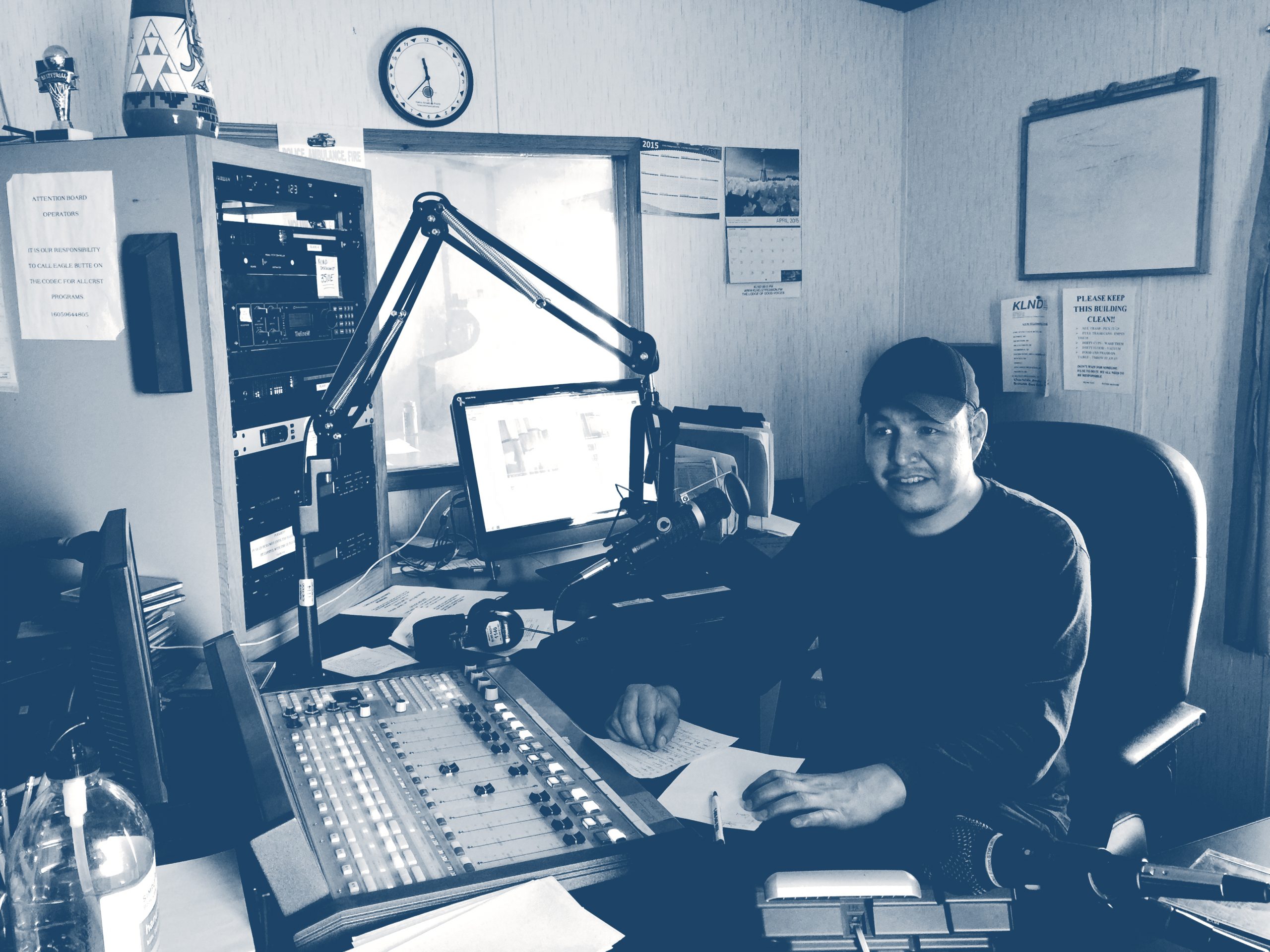
Once a year, during American Indian Heritage Month in November, American citizens pause to recognize the Indigenous peoples of lands now known as the United States. But what happens to Native people during the other 11 months of the year? Answer: They’re often rendered invisible. That invisibility is complicated by a shrinking Native American news that faces a range of unique challenges today.
My new report, American Indian Media Today: Tribes Maintain Majority Media Ownership as Independent Journalists Seek Growth, gives an overview of the state of Native American media and the challenges we face in telling our own stories. The report is one in a series commissioned by the Democracy Fund to shine a spotlight on the important role of media by and for diverse communities in the United States.
In so much of mainstream media American Indians are invisible as contemporary people or romanticized as relics of a bygone era. The invisibility affects how policymakers make decisions about Native people whose lives are often struck by high rates of poverty, suicide, poor health care, and missing and murdered Indigenous women.
This has made Native media a critical source not only to inform and engage our communities but also to lift up our stories in the broader culture. Yet, for several reasons, we face a lack of news in our own backyards. Media in Indian Country are grappling with many of the same challenges around sustainability that face the rest of the journalism industry, but it is exacerbated by low levels of philanthropic support.
Tribal governments can also be obstacles to independent reporting in Indian Country. An estimated 72% of all print and radio outlets in Indian Country are owned and controlled by tribal governments or tribe-owned entities, and according to a preliminary survey from the Native American Journalists Association’s RED Press Initiative, 83% of tribal journalists face intimidation and harassment when covering tribal affairs. This means modern-day tribal citizens receive news that is mostly censored and controlled by tribal governments. Freedom of the press, freedom of speech, and a free flow of information remain hampered without specific legal provisions rooted in tribal constitutions.
However, a small, but devoted cadre of independent media practitioners are working to create new alternatives and share their stories, free of Native government influence. I profile many of them in this new report and describe the important contributions they are making their communities. These local journalists deserve more attention and need more support. There is much to be learned from how they build and serve communities across often rural and expansive tribal lands.
Jodi’s organization, the Indigenous Media Freedom Alliance, is one of 155 newsrooms participating in the 2018 NewsMatch campaign. Right now every donation will be doubled by NewsMatch through the end of the year.
Something remarkable starts today. Across the country 155 newsrooms are banding together for a year-end campaign to stand up for journalism that strengthens democracy. Today is the first day of NewsMatch, a national call to action to support trustworthy local news and critical investigative reporting. For the next two months a group of funders will double donations to nonprofit newsrooms across the country. At a moment when news deserts are spreading and journalism is under attack, nonprofit newsrooms are expanding and refuse to back down. They are united in their commitment to serve the public, Now more than ever, they need the public’s support.
From November 1 to December 31 individual donations of $1,000 or less will be matched, dollar for dollar, up to $25,000 per newsroom. At NewsMatch.org you can search for participating newsrooms that report on issues you care about or cover your community, and you can donate to them all in one place.
Now in its third year, NewsMatch is a unique partnership between local and national foundations and companies that aims to raise millions of dollars for quality news, build the long term capacity of the nonprofit news sector, and raise awareness of the important role of journalism in our democracy. Local and national funders interested in supporting public interest journalism can still get involved (reach out to me at jstearns@democracyfund.org to discuss how NewsMatch can meet your goals)
Originally created by the John S. and James L. Knight Foundation in 2016, NewsMatch has more than doubled in dollars, donors, and participants in three years as it has become a platform for foundations and corporations to pool their funds and expand their impact. “NewsMatch is more than just a campaign. It is a movement that accelerates a new lane of journalism,” writes Karen Rundlet, a Journalism Director at Knight Foundation, “NewsMatch is stronger with multiple sources of financial support.”
New Funders Join NewsMatch to Support Quality News
In 2018 NewsMatch is growing significantly with new funders and newsrooms, representing the increased importance of nonprofit news to keeping our citizens informed, holding our leaders accountable, and covering the issues facing our communities and our nation.
One of the new funders joining NewsMatch in 2018 is the Jonathan Logan Family Foundation. Jonathan Logan, a longtime supporter of investigative reporting in the United States, invests in journalism that creates positive change. “NewsMatch is a perfect fit for us,” Logan said, “we look for opportunities where our support will make a significant difference.” The Jonathan Logan Family Foundation’s gift will both support the national campaign and provide an extra match opportunity to specific local newsrooms. “We are able to support dozens of worthy newsrooms by being part of the main NewsMatch fund, and at the same time offer additional support and incentives to more than a dozen newsrooms in the Deep South and post-Hurricane Maria Puerto Rico, regions of particular importance to us,” Logan said.
Facebook has also significantly increased its support this year, after partnering with NewsMatch in 2017 to raise awareness about the campaign. In August the Facebook Journalism Project announced it was contributing $1 million to the NewsMatch fund. “We are thrilled to do our part to help support these publishers that are providing critical news for communities across the U.S. and helping fill gaps in public information,” said Jason White, Facebook’s director of news partnerships. “This is Facebook’s second year supporting NewsMatch, and over this time, we’ve seen an increase in the importance of nonprofit newsrooms to the local news ecosystem.” Facebook is the first corporation to join the campaign.
In parallel with NewsMatch, at least 20 other foundations and donors have set up local matching efforts with individual newsrooms during the last months of the year. These donors include the University of Texas at El Paso which is providing $65,000 in matching dollars to Borderzine, The Zellerbach Family Foundation and The Ralph M. Parsons Foundation which are supporting Fostering Media Connections, the Asta MacDonald Memorial Match supporting WDET Detroit Public Radio, South Dakota philanthropists Dan and Arlene Kirby who are providing $25,000 in matching dollars to South Dakota News Watch, a match from the PRI-PRX Board, a group of major donors in Michigan who will be matching donations to East Lansing Info, and Hugh and Jackie Bikle, the Calhoun & Christiano Family Fund, and the Randy and Rebecca Wolf Family Fund who together are supporting BenitoLink.com with a $25,000 match.
Foundations Expand Their Support with More Dollars for More Newsrooms
In addition to these new supporters a number of foundations returned to support NewsMatch for a second year, and expanded their support in 2018. The Gates Family Foundation, which supported one newsroom in 2017, is offering an additional $1,500 match to eight Colorado newsrooms in 2018 as part of the Colorado Media Project, which aims to strengthen and accelerate sustainable, civic-minded journalism in Colorado. Melissa Milios Davis, vice president for strategic communications at the Gates Family Foundation, sees NewsMatch as a way to encourage Colorado outlets “to come together to brainstorm ways to increase individual donations at each outlet, while also amplifying the vital role that community support plays in sustaining high-quality local news in Colorado.”
The Wyncote Foundation in Pennsylvania is also increasing the number of newsrooms it is supporting through NewsMatch. “Wyncote Foundation is pleased to support the NewsMatch initiative again this year,” David Haas, Wyncote Board Vice Chair said. “NewsMatch allows us to support a range of strategies that strengthen non-partisan, fact-based journalism covering local and regional issues of concern to citizens in Pennsylvania and New Jersey, and that further civic dialogue and engagement within and across our communities.” Through these partnerships with NewsMatch, these place-based funders are making individual donations to local journalism go even further.
Solving Big Problems Together
All of these partners join Democracy Fund, the Ethics and Excellence in Journalism Foundation, Knight Foundation and the MacArthur Foundation who continue to support NewsMatch, which is housed at the Miami Foundation. Collaboration is core to the success of this effort. The campaign is driven by the Institute for Nonprofit News and the News Revenue Hub, both of whom support the 155 participants during NewsMatch and year round. By creating shared trainings, templates and resources, these two organizations have helped to create an unprecedented, coordinated approach to end-of-year fundraising across the nonprofit news sector.
“Ethics and Excellence in Journalism Foundation’s grant to NewsMatch supports the growth of nonprofit news across the country as well as locally in Oklahoma,” said program officer Tyler Tokarczyk. “The collaboration between national and local funders, and the participation of national and local news organizations makes NewsMatch a truly unique giving opportunity we are proud to contribute to again in 2018.” By combining partnerships in the field with partnerships across funders, NewsMatch is able to tackle big challenges none of us could do alone.
NewsMatch launches today and will begin matching individual donations to participating newsrooms, but foundations, companies and donors who want to join the effort are still welcome to contribute. The fund is housed at the Miami Foundation which handles all the administration and logistics for partner funders, making it easy for foundations and donors of any size to join NewsMatch. As the nonprofit news field has grown there is an urgent need to expand NewsMatch even further to support the journalism our nation needs. NewsMatch helped make 2017 a record-breaking year for giving to nonprofit news — this year we have to go even bigger with your support.
How can we help local news survive, transform, and thrive? This question will not be answered by one person, one organization, or one innovation. Instead, it will be answered by local ecosystems that have many players, each with their own strengths and weaknesses, coming together to be greater than the sum of their parts. It will look different everywhere around the country, but without this systemic approach, local news cannot survive.
This theory is at the core of the work of the North Carolina Local News Lab Fund, which is announcing $500,000 in grants today. NCLNL’s goal is to support people and organizations working to build a healthier local news and information ecosystem in North Carolina. It is a collaborative fund at the North Carolina Community Foundation, established by a group of local and national funders who believe in the power of local journalism, local stories, and local people to strengthen our democracy.
The grants were selected by an advisory board with representatives from the following foundations: A.J. Fletcher Foundation, Democracy Fund, Mary Reynolds Babcock Foundation, Prentice Foundation, and Z. Smith Reynolds Foundation, as well as subject matter experts from North Carolina Central University and NC Congress of Latino Organizations.
The fund’s first grants go to organizations working to expand access to critical news and information for all North Carolina communities. This cohort represents the fund’s commitment to supporting a diverse set of organizations pursuing meaningful projects to better serve local communities and strengthen the news and information ecosystem overall. Each of these grantees also represent vital networks of people, communities, and organizations that will engage and collaborate with their work.
It is, as Fiona Morgan wrote in “Learning from North Carolina,” a manifestation of how “North Carolina’s news ecosystem will likely succeed best as a network of networks, with distinct areas where people join forces, share resources or collaborate.”
These grantees are working to build new infrastructure for independent media, recognizing that we have to work together to meet the full needs of our communities. Across these efforts we saw a deep commitment to community and collaboration and a generosity and determination to openly share and jointly build a bold future for North Carolina.
Individually these are all great projects and organizations, and taken together they begin to connect people and communities across North Carolina in new ways. We are thrilled by the work these organizations will do, but this is just the beginning. We had more than 70 ideas submitted to the NCLNL through the application process, many of them addressing important needs and opportunities that we want to work on in the future.
Word on the Street/La Voz de los Jóvenes trainees learn how to tell stories in Asheville. Photo by Sekou Coleman.
The grantees are:
Asheville Writers:Word on the Street/La Voz de los Jóvenes – Asheville Writers in the Schools and Community provides creative writing and arts programs for young people in local schools and community programs. Word on the Street/La Voz de los Jóvenes is an online magazine with a program that mentors and trains youth of color to gather and publish news that engages their communities and builds racial equity.
Carolina Public Press: North Carolina Investigative Journalism Collaborative – Carolina Public Press is an independent nonprofit news organization established in 2011 with a focus on in-depth and investigative news in Western North Carolina. In 2018, it expanded to cover the entire state. CPP will lead the North Carolina Investigative Journalism Collaborative, which will launch collaborations between state and local media outlets, organize listening sessions between residents and members of the media statewide, and experiment with new ways to generate its own self-sustaining revenue.
Colectivo de Comunicación Participativa de Carolina del Norte (CCPNC): Enlace Latino NC – Enlace Latino NC is a Spanish-language website that offers local, state, and national immigration and policy news during a critical time of need in the Latinx community in North Carolina. With this grant, Enlace Latino NC will focus on building their capacity, adding more resources, and reporting on key issues.
Duke University Reporters Lab: North Carolina Fact-Checking Project– The North Carolina Fact-Checking Project is a collaborative effort focused on the 2018 state elections and 2019 state legislative session, providing rigorous fact-checked content for publications and broadcast programs statewide. The project aims to increase fact-checking coverage of public officials and candidates. It brings together partners with deep experience in substantive fact-checking with an innovative edge, including the Duke Reporters Lab, the News & Observer, and the Reese News Lab at the University of North Carolina at Chapel Hill.
NC Health News: General Operating Support – North Carolina Health News is a leading news source on information about health care for residents, policymakers, lobbyists, and healthcare workers across North Carolina. With this grant, the NC Health News staff will continue and strengthen the organization’s work.
NC Press Association: Training Program – The North Carolina Press Association (NCPA) supports newspapers statewide, offers a legal hotline, and hosts an annual convention. The NCPA is focused on a defending “the public’s right to know” by advocating for open government and championing First Amendment freedoms.
UNC Center for Public TV: Public Media NC and HBCU Radio Together – Radio stations at historically black colleges and universities in North Carolina are a valuable resource for local, relevant, and timely news for the communities they serve. This collaboration between HBCU radio stations and UNC-TV will give all involved an opportunity to learn from each other and collaborate across mediums.
UNC School of Media and Journalism: Trail Blazer – The Trail Blazer project will help sustain long-term coverage of stories by simplifying the research process for journalists in North Carolina. Through a mobile-friendly website, it will provide a comprehensive, updated, simple-to-navigate repository for journalists, including limited-scope facts, timelines, annotated documents, and links to existing articles. The core concepts of the Trail Blazer project were developed by veteran journalist Vaughn Hagerty, who broke a story about the presence of the chemical GenX in Cape Fear River.
WNCU: Advancement of Emerging Young, Diverse News Journalists – WNCU is a public radio station that serves partly as a hub to train young journalists at North Carolina Central University. The Advancement of Emerging Young, Diverse News Journalists project will train a diverse, inclusive, and underrepresented group of student reporters via the WNCU radio station and the student newspaper, The Campus Echo.
Working Narratives: Wilmington Ecology Project – Working Narrativesfocuses on reporting on pressing social challenges such as media justice, mass incarceration, and health equity. Founded in 2011, the organization works at the local and regional level to “tell great stories that inspire, activate and enliven our democracy.” The Wilmington Ecology Project will train citizens to produce and report their own stories through performance, radio, video, and other forms.
The advisory board of the Fund — Brett Chambers (North Carolina Central University), Elena Conley (Mary Reynolds Babcock Foundation), Damon Circosta (A.J. Fletcher Foundation) Teresa Gorman (Democracy Fund) Bobbi Hapgood (Prentice Foundation), Ivan Kohar Parra (NC Congress of Latino Organizations), Sorien Schmidt (Z Smith Reynolds Foundation) and Josh Stearns (Democracy Fund) — were inspired and challenged by the scope and creativity of the proposals we received. It was incredibly difficult to pick just a few grantees in this round.
In partnership with the advisory board, funder partners, and others, including Democracy Fund Senior Consultant Melanie Sill, the NCLNL will continue to explore ways to support and strengthen North Carolina’s local news ecosystem. This will include future grantmaking and convenings. It will not be done in a vacuum. We will strive to live the NCLNL’s stated values of learning, diversity, equity, inclusion, innovation, and transparency, and continue to share updates from our grantees and others here on the Local News Lab.
As trusted information providers, local and nonprofit journalism organizations play an essential role in providing news that communities rely on to stay informed, make decisions and participate in civic life. In the wake of the digital disruption of news and declining trust in the media, there is an urgent need to redouble funding for local and state coverage to ensure the nonprofit journalism sector can fulfill its democratic mission.
That is why the Democracy Fund, Ethics and Excellence in Journalism Foundation, Knight Foundation, and the John D. and Catherine T. MacArthur Foundation came together in 2017 to launch NewsMatch, a national matching-gift campaign to grow fundraising capacity in nonprofit newsrooms and promote giving to journalism among U.S. donors.
A new study released this month by the Shorenstein Center on Media, Politics and Public Policy at Harvard University revealed that from 2010 to 2015 nearly $1.8 billion in grants were given in support of journalism. However, only a small fraction, about 4.5%, went toward nonprofit local and state reporting. The report also found significant and troubling geographical gaps, with the majority of philanthropic dollars ending up in a few coastal cities.
NewsMatch was designed from the ground up to respond to the gaps that the Harvard research now highlights so clearly. It supported newsrooms in almost every state, brought new foundations and donors in, and expanded the capacity of journalism nonprofits to develop support from their community.
In 2017 NewsMatch provided 109 newsrooms with more than 500 hours of fundraising training, a professional campaign toolkit, national marketing around the importance of contributing to nonprofit news, targeted advertising using $100,000 in ad credits donated by Facebook, and a 1:1 match of individual donations, up to $28,000 per news organization. Nearly all 109 organizations who participated in NewsMatch raised more money, from more donors than ever before. In total NewsMatch helped raise nearly $5 million for local and investigative journalism and inspired 43,000 new donors to give to nonprofit news. Those are just the topline results. The report dives deep into how NewsMatch was structured, what worked and what didn’t.
We are currently raising dollars for NewsMatch 2018 in hopes of making it even bigger than last year. Several updates to the 2018 program reflect the evaluation’s suggestions:
As in 2017, NewsMatch is open to members of the Institute for Nonprofit News. The deadline to apply is Aug. 1, 2018.
We will support nonprofit news organization’s membership models by matching the full-year value of new recurring donations during NewsMatch.
We will offer extra bonuses to small and medium organizations that show they have measurably improved their fundraising capacity over 2017.
We recognize that individual donors support nonprofit news in many ways and will match gifts made by individuals through their businesses and family foundations.
This Fourth of July, Democracy Fund will celebrate its fourth anniversary as an independent foundation. Little did I know in the summer of 2014 just how profound the threats facing our country would turn out to be or the degree to which the health of our nation’s political system would become a near-universally recognized problem. Lately, I find myself thinking that this organization was created for this moment — though I did not realize it was coming.
Fittingly, July Fourth will also mark an important milestone in our growth as an institution — $100 million in grants made to organizations strengthening U.S. democracy. It has been our privilege to make these resources available to a remarkable group of leaders working to ensure that our democratic institutions deliver on their promise to the American people.
While Democracy Fund’s core mission has not changed from its founding, this organization looks very different from four years ago when we had a staff of three and a dozen or so grantees. The events of the past two years demanded that we clarify our core convictions and to dramatically expand our commitment to strengthen American democracy and defend the United States Constitution.
The purpose of this open letter is to share how we have changed, to demonstrate an ongoing commitment to our core programs, and to explain why we think it is so important that philanthropy stand up patriotically in this moment.
With today’s publication of our vision for a healthy democracy, I acknowledge that our commitment to bipartisanship cannot come at the expense of our core values. Indeed, we believe that being bipartisan cannot mean being neutral when actions are taken that threaten our republic.
At Democracy Fund, we believe a healthy democracy requires at least two competitive political parties — and that democratic institutions work best when they have broad support from across the political spectrum. We deeply value our ability to work with Republicans, Democrats, and independents to find ways to ensure that our democracy works for all Americans.
But we also believe in the dignity of every individual and in the equal protection of their rights under law. We believe that checks and balances, as well as respect for the rule of law, are critical to protect against abuses of power. We believe that political leaders bear an uncommon burden to act with integrity. And we believe that threats to the health of our democracy — as well as solutions to these — can come from all sides of the political spectrum.
Over the past two years, I have seen alarming and sometimes unprecedented violations of our country’s democratic norms. For an organization committed to strengthening democracy on behalf of the American people, this isn’t just disturbing — it’s humbling.
Over the past two years, I have seen alarming and sometimes unprecedented violations of our country’s democratic norms. For an organization committed to strengthening democracy on behalf of the American people, this isn’t just disturbing — it’s humbling.
Our first priority was to articulate the beliefs that underlie our work, and clearly assert those core democratic principles for which we stand. Working with our advisors and a diverse group of scholars, we created a healthy democracy framework to help explicate the values that motivate our efforts. The framework will serve as a compass, inform decision-making, and provide clarity about the principled positions underlying our actions for ourselves and others.
Having articulated these beliefs, we knew that staying the course in the face of new and widening gaps between our vision for a healthy democracy and the realities of America today was not an option. We rebooted some of Democracy Fund’s core programs and added new, bipartisan initiatives to stop abuses of government power, secure our elections, defend press freedom, and combat misinformation. We increased our staff by more than 40 percent and tripled the size of our grantmaking budget. We also created three new special projects that include two-year commitments of:
In addition, we launched the Democracy Fund Voter Study Group to help policymakers keep in touch with the beliefs and attitudes of ordinary Americans.
Even as we continue our ongoing work to strengthen American democracy, we’re taking a stand against real and direct threats to our Constitution.
Combatting the Abuse of Power
Core to our understanding of a healthy democracy is the notion that constitutional checks and balances protect against abuses of power and preserve the rule of law. Over the past year, Democracy Fund has worked to reinvigorate government accountability in a challenging environment in which government leaders have openly flouted ethics rules and challenged the independence of everything from the courts to the Justice Department.
Democracy Fund’s grantees are fighting back aggressively. Collectively, they have participated in more than 35 lawsuits targeting government corruption, secrecy, and ethics violations. In addition to exposing abuses, these legal actions are helping to protect institutions that have come under attack. For example, a FOIA lawsuit filed by Lawfare helped secure the release of 100 F.B.I. emails that contradicted the White House’s false narrative that former F.B.I. Director James Comey had lost Bureau support before his firing.
Other grantees, like the National Security Archive, the Project On Government Oversight (POGO), and the Government Accountability Project, have filed more than 2,300 FOIA requests to expose government corruption, misconduct, waste, and conflicts of interest. Work by POGO and Open the Government has led the Department of Homeland Security to release an Inspector General report criticizing initial implementation of the Muslim travel ban.
POGO, the Lugar Center, and the Levin Center are also continuing to encourage bipartisan congressional oversight by training nearly 300 Hill staffers on how to hold the executive branch accountable. In addition, POGO and the Government Accountability Project have distributed whistleblower education materials to more than 2,100 federal employees, NGO employees, journalists, and engaged citizens.
Another grantee engaged in especially urgent work is the Protect Democracy Project, which was established in February 2017. In its first month of operation, the Project successfully helped force the Trump administration to release a policy restricting communications between the White House and the Department of Justice. Then, it helped expose instances in which the White House had violated those restrictions. In just a year, the Protect Democracy Project has forced important public disclosures on issues ranging from potential executive overreach into a major healthcare merger, to alleged intimidation of federal workers, to the legal rationale behind military strikes in Syria.
Three grantees of our affiliated 501(c)4, Democracy Fund Voice — R Street Institute, Stand Up Republic, and the Niskanen Center — are working to build bipartisan networks to push back against threats to our democracy. These networks are working to stand up for democratic norms while building consensus on a vision for American democracy over the long term.
To stop the abuse of political power, our grantees are cutting deep into the weeds of government. But we are confronted by threats that go deeper still, undermining the most basic feature of our democracy: free and fair elections.
Securing Our Elections
We believe that voting is the cornerstone of our democracy; but when it comes to elections, Democracy Fund worries less about who wins than about whether people have faith in the outcome. False claims that millions of fraudulent votes were cast in 2016 have the potential to undermine faith in our elections — while creating a spurious justification for erecting barriers that make it more difficult for Americans to vote.
M.I.T.’s Election Data and Science Lab and the Center for Election Innovation & Research played a leading role in pushing back against these false claims that the Pence-Kobach Voter Fraud Commission sought to justify. These efforts to correct the record — alongside legal actions by Common Cause, the League of Women Voters, the Campaign Legal Center, the Lawyers Committee for Civil Rights Under Law, the N.A.A.C.P. Legal Defense Fund, and others — contributed to the eventual dissolution of the Commission.
We believe that voting is the cornerstone of our democracy, but when it comes to elections, Democracy Fund worries less about who wins than about whether people have faith in the outcome.
At the same time, we know malicious foreign actors made a concerted effort to undermine the 2016 presidential election and that the security of our next election cannot be taken for granted. For more than 12 months, Democracy Fund Voice worked with its partners to persuade Congress to provide state and local election officials with the resources and training necessary to maintain the highest possible security. This work paid off last month, when Congress included $380 million in grants to the states to improve cybersecurity, replace paperless voting machines, and perform post-election audits (among other measures). Lawmakers also approved $10 million in funding for the Election Assistance Commission — a 10 percent increase — and provided the F.B.I. with an additional $300 million to bolster election cybersecurity.
Democracy Fund grantees have also found innovative ways to get ahead of the next attack on our election infrastructure. The bipartisan duo of Robby Mook and Matt Rhoads (former campaign managers for Hillary Clinton and Mitt Romney, respectively) launched a new program at Harvard to help campaigns and election officials protect sensitive data against intrusion. The effort is organizing “tabletop exercises” that simulate attacks on election systems — and allow election officials and security experts to practice their response.
Additional grantees with a focus on money in politics have also played important roles. The Campaign Legal Center (CLC) developed a symposium and report about whether current laws are sufficient to prevent or deter future intrusion. Campaign finance complaints filed by CLC and Common Cause forced other actors, including President Donald Trump’s lawyer, to disclose more information about alleged foreign interference than otherwise known. Additionally, CLC and others have done important work to promote greater disclosure on social media platforms.
Defending the Fourth Estate
At a moment when journalists face profound economic and political threats, Democracy Fund is helping to ensure our fourth estate remains free and resilient. In the healthy democracy framework, we assert that journalists provide a critical check on power, holding our leaders accountable and revealing corruption, wrongdoing, and conflicts of interest. They provide Americans with the information they need to uphold the promise of a democracy of, by, and for the people. That’s why Democracy Fund has made a two-year commitment of $11 million to strengthen investigative reporting. It’s also why we’re supporting press freedom watchdogs, including the Reporters Committee for Freedom of the Press, Reporters Without Borders, and the Student Press Law Center.
Grants to the nation’s premier investigative watchdogs have enabled these nonprofit newsrooms to pursue a wide range of stories that have held administration officials accountable for wrongdoing, forced divestitures, and changed laws.
ProPublica has taken on biased algorithms, forced changes in Facebook’s advertising rules, and prompted New York City lawmakers to pass the country’s first bill to address discrimination produced by social media algorithms. And Commerce Secretary Wilbur Ross divested from his global shipping company after an investigation by the Center for Public Integrity showed significant conflicts of interest.
Too often, journalists become targets for threats and abuse as a result of their work to advance the public interest. Trump administration officials have gone so far as to call out Democracy Fund grantees by name. One grantee, the Pulitzer Prize-winning newsroom ProPublica, faced a cyberattack that took down its entire email system — an attempt to silence ProPublica journalists in retribution for hard-hitting reporting on hate crimes and extremists groups. In the face of these attacks, Democracy Fund’s support provided these grantees with the resources and independence they needed to stand firm, fix their systems, and continue their indispensable work.
Local newsrooms are, in many ways, the building blocks of our democracy, covering stories that matter to residents and holding local leaders accountable in a way that no other organizations can.
Local newsrooms are, in many ways, the building blocks of our democracy, covering stories that matter to residents and holding local leaders accountable in a way that no other organizations can. Yet, across the country, we’ve seen an increase in “trickle-down” attacks on the press, where those in power use their positions to undermine — or even encourage violence against — local journalists. These attacks have come at a time of severe economic turmoil for many local newsrooms, when their business models are failing — and their continued viability is in serious question.
That’s why Democracy Fund has worked hand-in-glove with peer funders to launch NewsMatch — an unprecedented campaign to strengthen nonprofit journalism and make 2017 a record-breaking year for giving to local investigative news. With the John D. and Catherine T. MacArthur Foundation, the John S. and James L. Knight Foundation, and a partnership of five additional funders, we matched donations to nonprofit newsrooms for the last three months of 2017, helping journalists raise more than $4.8 million. Among the more than 100 nonprofit newsrooms that participated, nearly all raised more dollars from more donors than ever before.
Even as we work to ensure that all Americans have access to quality local news and investigative reporting, Democracy Fund’s grantees are also striving to combat the misinformation that pollutes our public square. For instance, long before Cambridge Analytica captured national headlines, we published a report examining the ways in which social media platforms exacerbate information disorders, spread hate, and threaten our democracy.
But declining trust in media is not only a product of this political moment. It also stems from the ways journalism has at times stood apart from communities and failed to deliver stories that matter to them. Grantees in our Engaged Journalism portfolio continue to experiment with tools that foster a deeper connection between newsrooms and the public. In the context of that work, we’ve made significant commitments to making newsrooms more diverse and representative of their readership.
Through all of our efforts in this space, Democracy Fund is working toward a future where we can trust the headlines we see — and the democracy we shape together.
Protecting the Dignity and Rights of Each Individual
First among our core beliefs is a fundamental dedication to the dignity of every individual in our democracy, and the protection of their rights under the law. Without a recognition of our common humanity and a common American identity, our democracy cannot function. All too often, however, divisive rhetoric targeting Muslims and immigrants — rhetoric that has been embraced, over the past year, by policymakers, government officials, and media figures — encourages bigotry among the public while creating political momentum for policies that demean individuals and threaten to violate basic civil rights.
Nationally, as well as in individual communities throughout the country, Democracy Fund grantees are fighting for greater inclusion — and pushing back against policies that undermine what it means to be an American. While some leaders in government and the media blamed the hate-motivated violence we saw in Charlottesville on “both sides,” Democracy Fund grantees like Faith & Public Life were training clergy in nonviolent strategies to protect peaceful demonstrators from gun-wielding white supremacists. In the aftermath of that conflict, Georgetown University’s Institute for Constitutional Advocacy and Protection (ICAP) acted to prevent it from happening again. ICAP lawyers discovered provisions of Virginia law — dating back to 1776 — that prohibit “paramilitary activity.” This discovery became the basis of a 79-page lawsuit ICAP filed in Charlottesville last October.
As activist groups, members of Muslim, Arab, and South Asian (MASA) communities, and allied organizations came together, over the past year, to challenge the Trump administration’s Muslim and refugee ban, the Proteus Fund’s Security & Rights Collaborative (SRC) played a critical coordination role. Through the #NoMuslimBanEver campaign, SRC helped facilitate mobilization efforts across the country — and also provided direct monetary and strategic support to MASA organizations. Their and their grantees’ work continued this spring, when ICAP’s Neal Katyal, a former acting U.S. solicitor general, argued against the ban before the Supreme Court.
In our effort to maintain a just and inclusive society, Democracy Fund has also partnered with Freedom to Believe, an organization that brings people of all faiths and backgrounds to mosques to learn more about Islam and forge connections with Muslim communities. Similarly, our grantee Veterans for American Ideals is using proven strategic communications tactics to promote tolerance. Their #WhatIFoughtFor campaign showcases moving collaborations between refugees and military service members that are helping to make America, in every sense, a more perfect union.
In recent months, Democracy Fund staff have also worked closely with Civic Nation and NBCUniversal to support the re-launch of their “Erase the Hate” campaign to combat prejudice, hate crimes, and the spread of hate speech online.
Understanding the American Public
The concept of robust representation is embedded throughout our healthy democracy framework and is fundamental to the proper function of our democratic republic. In this unique and consequential moment, it is as important as ever before that America’s leaders — in public office and at every level of civil society — hold a nuanced understanding of the American public, their experience and preferences, and how their changing attitudes are reshaping our politics. To this end, Democracy Fund created the Voter Study Group to dig deep into public opinion data — and then to analyze and share those results with policymakers, government officials, and the media.
There are two key attributes that distinguish the Democracy Fund Voter Study Group from other polling efforts. First, the group itself is made up of a diverse group of scholars from across the political spectrum, ranging from the Center for American Progress and the Brookings Institution on the left to Heritage Action and the American Enterprise Institute on the right. This remarkable diversity of opinion not only increases the quality of our analysis; it also means we have been able to gain attention and interest from media and policymakers in important and unusual ways. Second, the use of a longitudinal dataset — which surveys the same group of people who have been questioned since 2011 — has yielded deep insights into how the American electorate is changing in ways that are quite unique. We believe that the collaborative nature of this project lends itself especially well to the vigorous, informed dialogue across ideological difference that is necessary to sustainable policy and sustainable politics.
Since its launch, the Voter Study Group has released ten reports. Initial analyses focused on understanding the 2016 electorate, examining the composition of President Trump’s political base, and considering how party coalitions are changing. More recently, the group published “Follow the Leader,” a report that sought to assess the health of American democracy by better understanding authoritarian attitudes among the public.
What we found was alarming. Nearly one in four Americans say it would be good to have a strong leader who doesn’t have to bother with Congress or elections. Nearly one in five say the same of military rule. In aggregate, 29 percent of respondents showed at least some support for an authoritarian alternative to democracy.
And yet, the cause for hope was clear: when offered a direct choice, the overwhelming majority of Americans chose democracy. Moreover, we didn’t see a correlation between dissatisfaction with democracy and support for authoritarian options.
Frustration and anger at the state of our democracy are well founded; openness to autocracy is not. The big question for us — as an organization and a leader in the philanthropic space — is what more we can do to strengthen our democracy, both for the next election and for the next generation.
Our Commitment to a Healthy Democracy
We live at a time when the principles articulated in our healthy democracy framework are threatened by uniquely dangerous circumstances. At Democracy Fund, we firmly believe these threats demand a full-throated response.
Admittedly, the approach I have outlined above is far more aggressive — necessarily so — than the one we took during our first few years of operation. In the face of unprecedented threats, philanthropists — including Democracy Fund — can’t just do what we’ve been doing. This moment demands something more than business as usual. That’s why Democracy Fund is calling on our peer organizations to take action — and why, moving forward, we will be proud to serve as a partner and resource to any funder willing to stand up and speak out for our Constitution.
Even as we respond to the current crises, we know the conditions that gave rise to this moment will still be with us for the foreseeable future. So we all need to commit to the long-term health of our democracy. Beyond the work outlined in this letter, Democracy Fund continues its work to reduce polarization, modernize elections, diversify newsrooms, and perform other essential tasks to strengthen our political system. Our hope is that peer funders will also join us on these longer-term projects.
At a time when our political institutions are under tremendous strain, Democracy Fund and its partners have been inspired by ordinary Americans who are standing up in extraordinary ways to help protect our republic. Their examples are proof that the vision outlined in our healthy democracy framework is not too much to hope for. That is why we’re rallying experts, activists, political leaders, and patriotic philanthropists to renew their personal responsibility for the greater good of our democracy.
Efforts in journalism to support diversity, equity, and inclusion (DEI) over the past decade have been ineffective in creating dynamic change in the stories, sources, and staff of news outlets in the United States.
Clearly, the dramatic financial downturn in newspaper advertising revenue has placed strain on all legacy journalism organizations. However, those dynamics alone do not explain the persistent gap in employment opportunities between minorities and their white counterparts seeking jobs in journalism following college graduation. Or excuse the historic leadership failure of large and profitable outlets to fulfill their promise to diversify their ranks, which has an outsized impact on communities of color given the dearth of opportunity at smaller newsrooms.
The purpose of this report is to begin to understand philanthropic interventions supporting diversity, equity, and inclusion in journalism from 2009 – 2015. As a foundation new to DEI funding in journalism, which has not made any grants in this area during the period under consideration, we plan to use this report to identify major funders and recipients of institutional grants.
This report represents our first attempt to get at this information using data from Foundation Maps for Media Funding, created by the Foundation Center for Media Impact Funders. We are aware of the many limits of this data set due to self-reporting and challenges in categorization. Even with those challenges we are proud of the work that Katie Donnelly and Jessica Clark at Dot Connector Studio have done so far to illuminate larger trends and we plan to use this report as a launchpad into further analysis of the organizations supporting diversity, equity, and inclusion in journalism.
We are already getting started. We are partnering with funders including the Knight Foundation and Open Society Foundations to support data training from the Ida B. Wells Society; News Integrity Initiative and Gates Foundation in leadership training from the Maynard Institute; Ford Foundation to support the National Association of Black Journalists; Google News Initiative with the revamp of the ASNE Diversity survey led by Dr. Meredith Clark; Nathan Cummings in support of DEI initiatives at CUNY; MacArthur and McCormick Foundations with new approaches in Chicago like City Bureau and the Obsidian Collection; and Heising-Simons Foundation in paid internship with the Emma Bowen Foundation.
At Democracy Fund, our approach to journalism is focused on building trust and engagement. We break our Engaged Journalism Strategy into three tracks focused on (I) Audience-Driven Storytelling, (II) Diversity, Equity, and Inclusion, and (III) promoting Transparency.
Through our Audience-Driven Storytelling work we invest in innovations and projects that support journalists in reorienting their work towards a focus on the concerns of their audience. This involves building inclusion into newsroom practices, supporting universities as teaching hospitals for innovation, creating communities of practice around engagement, and developing new practices, people, and products hard-wired for engagement.
Our Diversity, Equity, and Inclusion work focuses on improving the diversity of sources, stories, and staff in news outlets. This work involves creating an inclusive environment at news outlets; recruiting, retaining, and promoting diverse staff, including leadership; and working to develop and sustain minority ownership of media properties.
In our Transparency work, we seek to help news outlets and the public better understand one another. We are committed to supporting innovations in engaged journalism through grantmaking, partnerships, and collaboration to strengthen the Fourth Estate and the democratic principles on which our nation is founded. This report is part of that commitment. We will continue to seek opportunities to collaborate with news outlets, journalism support organizations, and partner funders to achieve this goal.
Journalism has long struggled to reflect the diversity of the communities it serves, and over the past decade, most efforts to support diversity, equity, and inclusion (DEI) in news outlets have been unsuccessful in creating meaningful change within the stories, sources, and staff of newsrooms across the United States.
New research released today by Democracy Fund traces half a decade of philanthropic investment in organizations, programming, and research aimed at increasing DEI in journalism. We commissioned this report to learn from the important work undertaken up to this point, to guide our future investments, and to spark discussions across philanthropy regarding the urgent need to address these challenges with significant new resources.
This report is based on data from the Foundation Maps for Media Funding, created by the Foundation Center for Media Impact Funders. The data set has some important limitations due to the nature of self-reporting and challenges around how grants are categorized. Even so, Katie Donnelly and Jessica Clark at Dot Connector Studio have done great work to reveal larger trends in the field.
From 2009 to 2015, $1.2 billion was invested in journalism, news and information in the U.S.
Recent research by the Shorenstein Center at Harvard and Northeastern University, using the same Foundation Center data as well as a study of foundation 990 tax forms, found that there is simply not enough philanthropic dollars flowing into journalism to make up for the gaps in what has been lost from legacy newsrooms. Amongst the funding that does exist there are troubling gaps and disparities. Our report provides a deeper look at one of those gaps, showing that there are even fewer dollars are going to DEI efforts within the industry.
Here are a few interesting takeaways, according to data as of February 2018:From 2009 to 2015, there were 1,105 grants totaling $105.6 million from 274 funders to 294 recipients pertaining to either racial and ethnic groups, women and girls, or LGBTQI populations.
Funding has declined in these areas overall, both in terms of dollar value by $1.3 million and total number of grants by 18.
When it comes to funding that serves racial and ethnic groups, relatively few dollars go towards financial sustainability compared to programming and project-specific funding.
There has been significantly less investment in gender-related news and staffing compared to racial and ethnic groups.
Funding serving LGBTQI populations in journalism remains extremely limited.
Here’s a breakdown of philanthropic support strategies for funding DEI in journalism.
The past efforts represented in these numbers faced stiff headwinds and real challenges, including a dramatic financial downturn that strained the news industry. But tight budgets alone cannot explain the persistent gap in employment opportunities between minorities and their white counterparts seeking jobs in journalism. Nor does it excuse the historic leadership failure of legacy outlets to fulfill their promise to diversify their ranks.
Reviewing this history, we are left with more questions than answers: How should we think about supporting programs and investigative projects looking at inequality when they may be housed at news outlets with a weak history of supporting diversity, equity, and inclusion internally? How do we rethink equitable funding so that program-specific funds at ethnic media outlets don’t exacerbate financial and structural uncertainty? And how do we ensure that investments in diversity, equity, and inclusion have broad and measurable impact across the industry?
Democracy Fund isn’t represented in the data released today because we only became an independent foundation in 2014. However, in our first few years we’ve prioritized this work. So far we are:
Working with News Integrity Initiative, Craig Newmark Philanthropies, and Gates Foundation in diverse leadership training from the Maynard Institute;
Collaborating with Google News Initiative to help revamp the ASNE Diversity Survey led by Dr. Meredith Clark;
Investing in new models like City Bureau with the MacArthur Foundation
Partnering with funders like Knight Foundation and Open Society Foundations to support data training from the Ida B. Wells Society;
Working alongside the Heising-Simons Foundation to support paid internships for aspiring journalists of color through the Emma Bowen Foundation.
Together with these funders, we are learning from the research we released today to ensure that our strategies are as effective and equitable as possible. We are committed to supporting innovations in engaged journalism through grantmaking, partnerships, and collaboration. This report is part of that commitment.
Cookies Notice
This website uses cookies to provide you with an improved and personalized experience. By using this site you agree to our use of cookies. Please read our cookies policy for more information on the cookies we use and how to delete or block them.